
Permaculture Design in a Learning Community
The Permaculture Design Learning Community is an immersive experience that explores how we can observe, understand, and participate in the regeneration of the places we inhabit.
Permaculture design is at the heart of the program, bringing together ecological thinking, practical skills, social permaculture, and collaborative learning. Throughout the program, participants will work together to develop a real-world permaculture design applicable to Campo do Vale, involving observation, site analysis, mapping, collective decision-making, and design development.
Learning takes place within a living environment, bringing theory and design together with the practical work of regeneration, community life, and the various learning processes that will be taking place at Campo do Vale.

This course is presented by the following partners:


Course learning goals

Design
Develop a practical permaculture design applicable to Campo do Vale through a collaborative process, beginning with the observation and analysis of the site and leading to the mapping, development, and presentation of the design. Participants will explore different design tools while engaging directly with the landscape and the regenerative processes already underway.

Climate and relief
Adapts design strategies to climate patterns; observes, improves and creates microclimates; adapts design to slope, elevation, orientation and local climate patterns.

Water
Understands the natural water cycle and the effects of human intervention. Uses earthworks to harvest rainfall, recharge depleted groundwater and prevent erosion. Learn to use and reuse water responsibly, including greywater solutions, constructed wetlands and aquaculture.

Soil
Understands the living and non-living aspects of soil and how proper human management can maximize soil productivity and health. Knows strategies and practices techniques that increase soil fertility and resilience in different climates and at different scales of use.

Living Landscape Management
Understand the basic principles of ecology: succession, nutrient cycling and energy flows, behavior of complex systems. Select appropriate solutions for intensive and extensive landscapes; Understand the benefits of multiple yield systems at different scales, including diversified gardens, agroforests, agrosilvopastoral landscapes and managed forests.

Social and economic applications
Understand the appropriate technologies and techniques for sustainable human construction and society, including: natural building, energy-efficient home design, community and decision-making strategies, cities in transition, ethical livelihood creation and micro-enterprise, solidarity/social economy, local/alternative currencies.
More about the course
A Living Learning Ecosystem
Over the course of these two weeks, Campo do Vale transforms into a living ecosystem of learning, where different approaches to regeneration come together.
In addition to the Permaculture Design Learning Community, the space will host “Regenerative Practices: Art, Ecology, and Social Fiction,” an international artist residency, and “Co-creating a Learning Landscape,” an education program on regeneration featuring volunteers from the European Solidarity Corps.
Together, these different paths form an ecosystem of participants, artists, volunteers, facilitators, and other actors who share the same landscape. Although each program maintains its own process, their coexistence opens up possibilities for encounters, the sharing of practices, and exchange between permaculture, ecology, art, education, and community life.
For participants, this also means experiencing permaculture design in direct connection with the practical regeneration work taking place at Campo do Vale, linking observation and design to the implementation and ongoing care of the landscape.
Facilitation Team
The Permaculture Design Learning Community has a diverse team of facilitators, bringing together expertise in permaculture design, landscape ecology, agroecology, education for regeneration, community processes, and social permaculture.
Lesley Martin and Hugo Oliveira will guide key aspects of the permaculture design process, together with a broader group of facilitators and practitioners who will contribute different perspectives and practices throughout the experience.

Lesley Martin
Quinta Vale da Lama
Lesley has been teaching permaculture for over 20 years. In 1995, while running an organic farm in the UK, she completed her PDC with George Sobol, who was also her permaculture diploma tutor. After 2 years of study and training, she became a Permaculture teacher, working for government and adult training institutions in Great Britain. In 1998, she moved to the Monchique mountains. She began designing and implementing permaculture at Quinta Vale da Lama.

Hugo Oliveira
Orla Design
Landscape Ecologist and Permaculture Designer. Co-founder of Orla Design and Regenerative Design Consultant. He has a master's degree in Ecological Design Thinking from Schumacher College and is completing a PhD in Interdisciplinary Landscape Management at the University of Évora. He has been actively working with Permaculture as a designer, trainer and researcher since 2006, mainly in the field of Ecological Landscape in Europe, Asia and Australia. He worked as a researcher at the Center for Ecology, Evolution and Environmental Change (Uni.Lisboa). At Quinta Vale da Lama, he advises on regenerative landscape strategies for the semi-arid Mediterranean, with a focus on agroforestry as a regeneration tool.
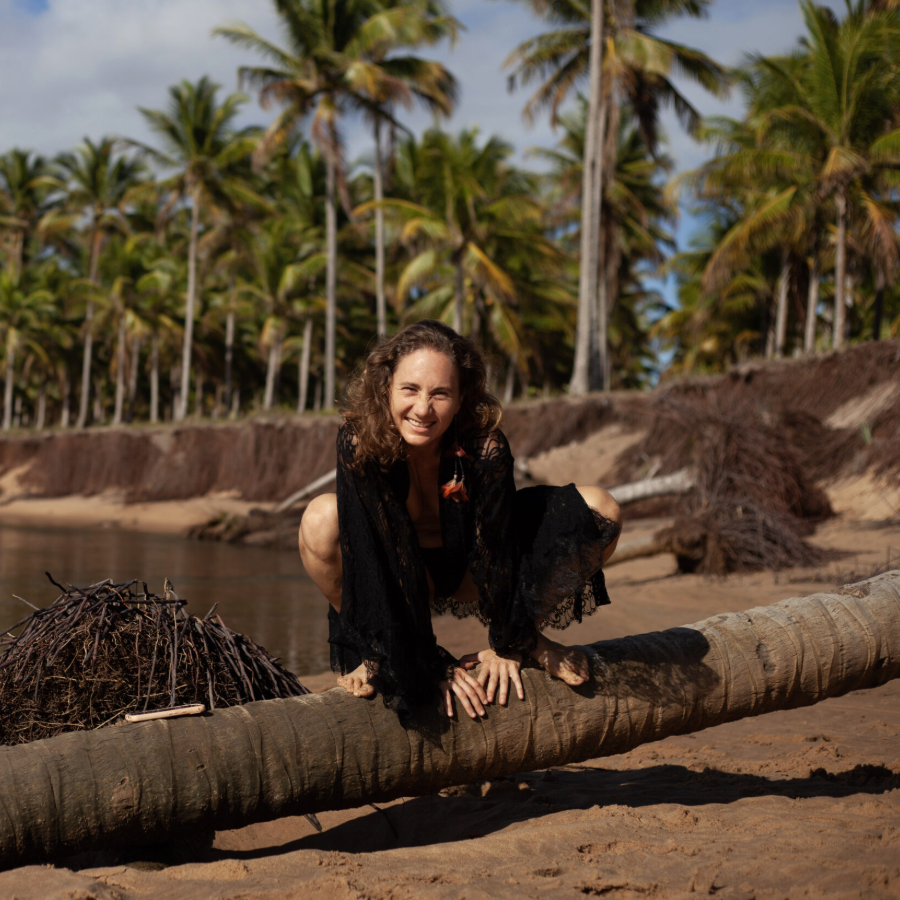
Márcia Peixoto
Novas Descobertas Association
Márcia Peixoto is a biologist with a postgraduate degree in Agroecology and a certified facilitator with Gaia Education, with over 20 years of experience in ecovillages and intentional communities around the world. Her practice integrates ecology, permaculture, mindful relationships, and conflict mediation. She represents the Piracanga Ecovillage, in northeastern Brazil, in the Global Ecovillage Network’s Keystone Communities project, which is dedicated to climate resilience. Her nature-inspired educational practice combines her interests in native bees, social permaculture, agroecology, and community life.
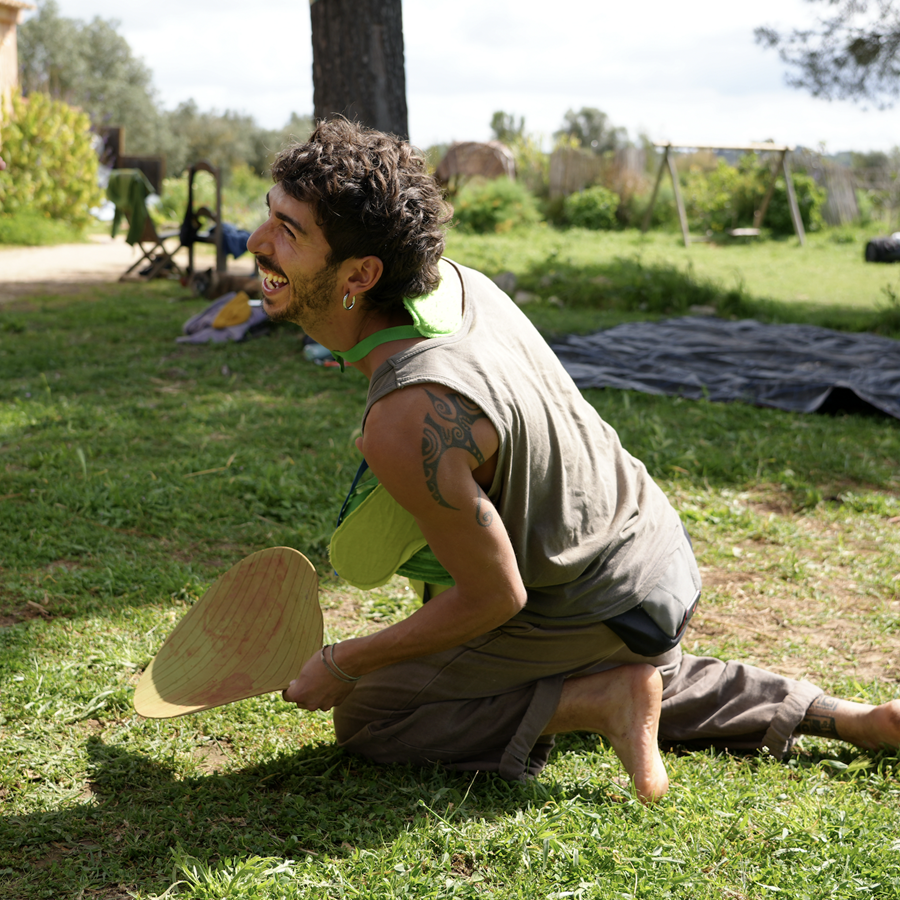
Alessandro Caruso
Novas Descobertas Association
Alessandro Caruso is a social and cultural educator with a background in psychology and educational sciences. He works in experiential and non-formal education, exploring how learning, community life, and social relationships can contribute to regenerative processes. At the Novas Descobertas Association, he facilitates educational experiences with children and youth and serves as one of the guardians of Campo do Vale, contributing to the care, maintenance, and oversight of the association’s green spaces and learning landscape. His work combines education, community life, and hands-on engagement with the local environment.
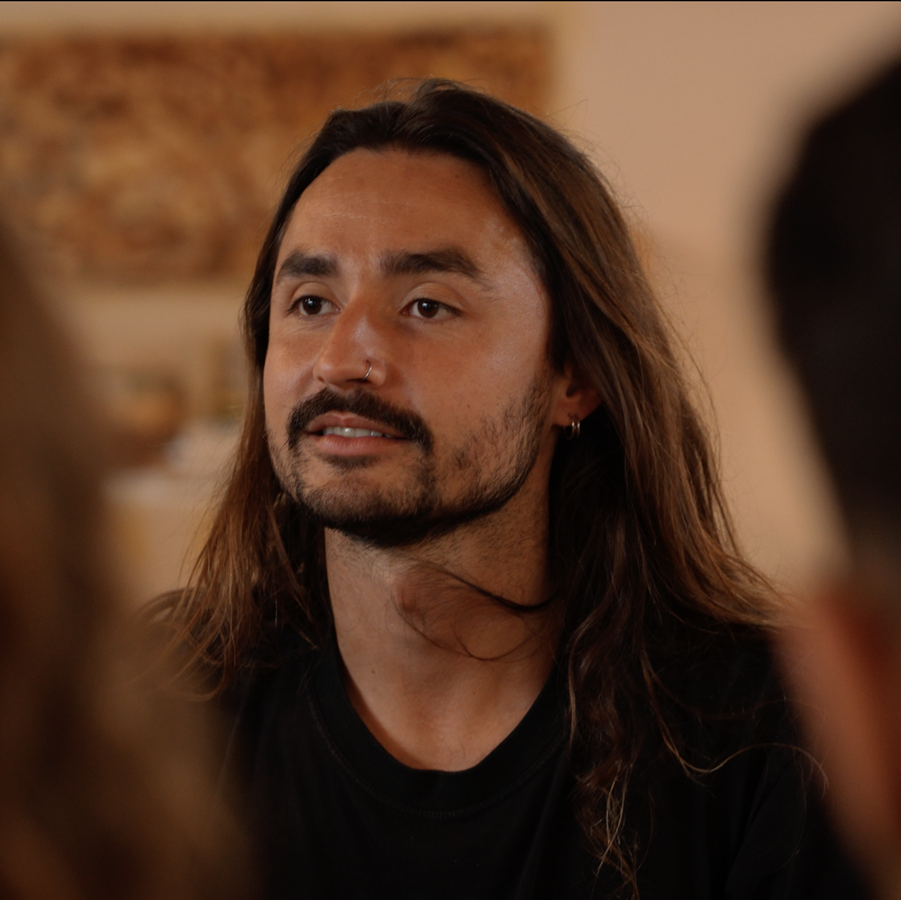
Gabriel Figueiró
Novas Descobertas Association
Gabriel Figueiró works in the fields of education for regeneration, community processes, and social permaculture. His practice focuses on creating collaborative spaces where people can learn together, build relationships, and reflect on the ways we live, organize ourselves, and envision our communities. Through facilitation, community management, and participatory projects, he explores the role of collaboration, dialogue, stories, and collective narratives in strengthening a sense of belonging, connection, and regenerative ways of relating between people and the land.
+ More guest facilitators to be confirmed
Important details

Dates
Camp dates:
September 30 through October 14, 2026
Arrival: September 29 after 5:30 p.m.
Departure: By 12:00 p.m. on October 14
Registration deadline:
September 20, 2026
For whom?

From 18 years old.

Languages
English, with translation into Portuguese of specific and/or technical terms when necessary.

Where
At Quinta Vale da Lama.
In our activity area - Campo do Vale.
See how to get to Campo do Vale - Quinta Vale da Lama

Schedule
9:00 a.m. to 1:00 p.m. and 2:00 p.m. to 6:00 p.m.
Optional evening sessions.
Sample timetable
Click here to see.


Prices
- €725 Complete – All meals and camping included
- 600€ Partial - Non-residential, includes lunch only
What does it include?
- A certified Permaculture Design program that combines theoretical foundations, collaborative design, hands-on experiences, and learning directly from the landscape;
- 2 days of extra content offered by the team of teachers and guests; including collaborative design methods and tools and site visits to Quinta Vale da Lama and other local projects;
- Social permaculture in practice throughout the course experience; including community decision-making methods, group facilitation tools and knowledge sharing;
- Ethically sourced vegetarian food from our own production and local sources. 3 meals a day (only lunch for non-resident participants), plus snacks and tea/coffee during breaks;
- Access to our site's facilities, including prepared and shaded camping areas, hot showers, indoor toilets and cafeteria, as well as Wi-Fi, charging stations, course library, tools and teaching materials.
- A genuine, collaborative permaculture design process for Campo do Vale.
- Practical experiences related to regenerative strategies currently being implemented in the area.
For scholarships and other information: programas@projectonovasdescobertas.org
Camping & Facilities
Campo do Vale at Quinta Vale da Lama
Campo do Vale is not just the venue where the program takes place: the landscape itself becomes part of the learning process, allowing participants to connect observation, design, and hands-on restoration work.
Participants will have access to on-site camping facilities, including shaded tent sites, showers, toilets, a cafeteria and recreational areas. Some camping materials can be provided; please indicate your needs on the registration form.

1 Workshop Area


2 Multipurpose kitchen


3 - Bathrooms and showers


4 - Outdoor meeting area and camping area


5 - Versatile indoor pavilion


General photos


Quinta Vale da Lama
43 hectares - Connecting people of all ages to nature
Thousands of trees have been carefully planted, complemented by the installation of water collection systems to reinforce their growth.
Soil fertility receives special attention and is continually enriched through the incorporation of indigenous microorganisms, compost, bokashi, earthworms, mulch and other natural soil improvers.
An on-site soil laboratory helps monitor and evaluate the effectiveness of these interventions. In addition, a small flock of sheep, two donkeys, and a handful of chickens are strategically rotated across various plots, following a holistic grazing plan designed to optimize soil health. Furthermore, the creation of five temporary Mediterranean ponds serves to promote biodiversity.
What people say about the PDC
"I came to this course looking for more knowledge on how to work with the land in a regenerative way. I found this and much more!"
Charlie McCallum
Tavira, Portugal
"This is the place for anyone looking to do their PDC; not only for the wonderful places that surround you, but also for the quality of the teaching and the way it is shared, all the resources and the team that supports this experience."
Teresa Henriques
Cartaxo, Portugal
"Doing a two-week CPD can be intense, as it's a lot of information in a short period of time, but the team knew how to keep the space and look after everyone! I would recommend this PDC to anyone, anywhere, who wants to live a more connected life!"
Jim Groot
The Netherlands
"Without a doubt, a phenomenal program! Between the stimulating learning environment, the practical application of permaculture principles in real-world situations, and meeting and connecting with other permaculture enthusiasts in the region, this course has greatly contributed to deepening my understanding, the ability to implement immediately in my own situation, and broadening my knowledge base so that I can continue to spread this knowledge to others."
Shana Ritter
Odiáxere, Portugal
Frequently Asked Questions
REGISTRATION AND CANCELLATION
How much is the deposit? Is it part of the course fee?
The deposit is 100€ and secures your place. Yes, it is part of the total cost of the course, we will inform you by email when you have to pay the remaining balance.
Is there a refund policy?
- Deposits are non-refundable 1 month before the course start date.
- The full tuition fee must be paid 1 month before the start date of the course.
- In the unlikely event of course cancellation, participants will be notified at least 2 weeks before the course start date and the tuition fee and deposit will be refunded in full.
- COVID-19 cancellation policy: We reserve the right to cancel a course up to 2 days before the course start date if the course is likely to coincide with a government quarantine/travel ban in our region due to the novel coronavirus. In this case, we will refund the course fees in full, including the deposit.
How quickly will they respond if I'm accepted?
Your registration will take place immediately after the registration process has been completed. We will send you an electronic confirmation message; this is not an automatic response (we like to read the form first and respond personally), so it may take a few days before you receive the last confirmation. If the course is full, we have a waiting list and we will let you know.
DIET & FOOD
If I'm allergic to certain foods, is there an option for me?
We offer a vegetarian and vegan diet. Please inform us of any food allergies on your registration form.
Can I bring my own food and prepare it in your space?
We provide all meals during the course, including snacks. Students will not have access to the kitchen outside of cooking hours. Don't hesitate to bring along snacks or any other specific elements of your diet, which can be stored in a designated space for your convenience.
ACCOMMODATION
How to get there? And when?
You will receive an email with general details after your registration, as well as a final confirmation 2 weeks before the start of the course with all the details on how and when to reach us. Please make sure we make travel arrangements to meet the timetable accordingly.
Where can I park my car/camper?
We have a few options for parking; tell us how you're traveling and we'll find the best option for you.
What should I bring to camp at your site?
We suggest you bring: a notebook and pen, work clothes/shoes, camping equipment (tent/sleeping bag/bed), toiletries, swimming equipment, hat, warm jacket/raincoat, water bottle/personal cup and flashlight. If you're coming by car or from far away, bring tools and work gloves.
Can you provide any camping equipment?
We have some tents, mattresses, sleeping bags and warm blankets, which we'd be happy to share with you if you're coming from far away. Let us know on your registration form or contact us for more information.
Can I bring my pets?
We have our own pets and farm animals, as well as children around, so we ask participants not to bring pets into our space.
Is there a laundry room?
We don't have a laundry service during the course days. It is possible to do some shared laundry on the day off. Hand-washing facilities will be available on the other days.
Can I bring my electronic devices and charge them? Is there Internet?
Yes, it's possible. Wifi is also available.
Is there insurance?
We have general insurance to cover personal accidents and injuries.
CULTURE
What is the culture of the Learning Community?
Our intention is to co-create the learning experience with each group. We recognize that knowledge exists within different people, practices, cultures, and ways of relating to the place. The facilitators bring their experience and tools, but the participants, volunteers, artists, practitioners, and the landscape itself also contribute to the learning process.
We therefore approach the program with curiosity, reciprocity, and openness to different forms of knowledge. Rather than viewing regeneration as something we impose on the landscape or the community, we explore how we can participate more consciously in the living systems and relationships of which we are already a part.
Learning to care for the place thus becomes a collective practice.
Can I smoke on your campus? What about drugs and alcohol during the course?
Our space is an educational campus that promotes healthy lifestyles, with children often sharing the space with us. For these reasons, we ask everyone to avoid any drugs and to respect the designated smoking areas and consume alcohol responsibly on site. We ask that you take care not to leave glasses, bottles or cigarette butts lying around.
COURSE DETAILS
What language is the course taught in?
Our courses are taught in English. Translation into Portuguese can be done if necessary. Group work can be organized by mother tongue if necessary.
What is the course timetable?
Today's standard is:
8-8.45am: Breakfast
9-1pm: Morning circle, sessions focusing on theory and examples from the core curriculum
1-2pm: Lunch
2-6pm: Group work, sessions focused on collaboration, design and practical skills
7-8pm: Dinner
9-10pm: Evening session: co-created with the participants according to their interests, available skills and the themes of the day
Does this course offer any digital teaching materials?
We will offer some materials that we have collected over our many years of offering these PDCs; including presentations of the core curriculum, plus additional resources to support self-learning. During the course, we will invite students to organize the best way to record and share learning according to the needs and ideas of the group.
Is there a free day?
Yes, there will be a free day in the middle of the course so that you can rest and enjoy our surroundings.
CERTIFICATE
Will I receive a certificate upon completing this course?
Participants who complete the program and take part in the collaborative design process will receive a certificate of completion from the Permaculture Design Learning Community.
VISITS AND COLLABORATIONS
When can I visit?
Vale da Lama organizes weekly guided tours to get to know the Quinta. To visit Campo do Vale - educational campus, contact us beforehand to find out about open days or join Volunteering Saturdays, a perfect opportunity to join in the action.
Can I volunteer for your project before or after the course?
We often organize volunteer opportunities, cutting-edge programs and other activities around our courses. Get in touch with us and we'll let you know all the options available.
Can I bring my children or family with me?
Our space is safe and can accommodate people of all ages, so we can consider the possibility of having your family and children with you; depending on the number of participants on the course and on payment of an extra fee to cover food and accommodation. Depending on the age and level of autonomy of the children, we can suggest and help find someone to look after them. For more information, please contact us.
MORE INFORMATION
None of my questions are here...
If you have any questions, concerns or suggestions, please do not hesitate to contact: programas@projectonovasdescobertas.org
Ready to join the Learning Community?
September 30 – October 14, 2026
Campo do Vale · Lagos, Portugal